AI Didn't Take The Design Jobs. It Took The Way You Learn Them.
The boring, repetitive tasks that used to teach a junior designer the industry are the first ones being handed to a machine, and nobody's built what replaces them yet.
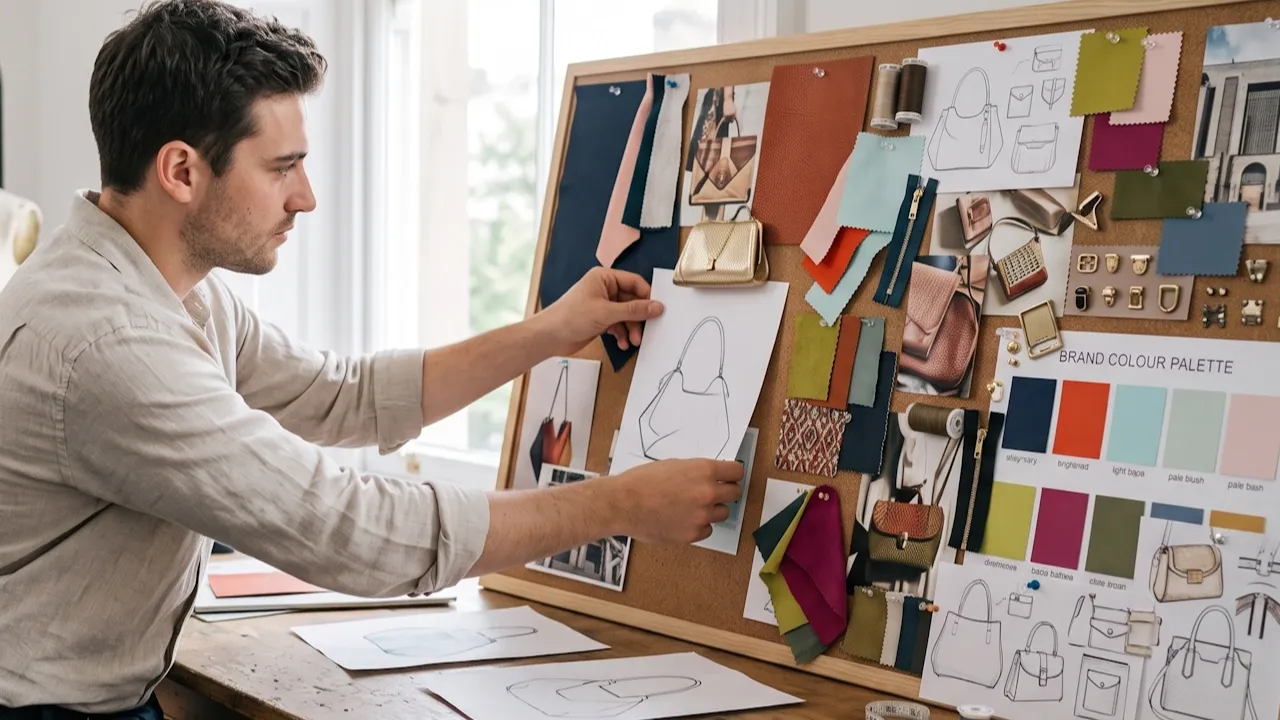
I think about my first moodboards sometimes, and although I couldn't tell you exactly all these years later what was on all of them. What I do remember is that I was good at it almost straight away, and that I still couldn't have told you why. That gut sense, of why one reference works and the next one doesn't, only turned into something I could actually explain once I'd used trial and error many times over. Nobody taught me this in a lecture. This built up slowly, through doing it again and again, even though the talent was already there.
So I was thinking lately. If a moodboard now takes four seconds and a decent prompt on an AI system, what happens to the kind of learning that used to take years of doing it, badly, first?
Everyone in fashion already knows AI is changing the industry. That part isn't really up for debate. What I don't think we're talking about enough is which jobs are disappearing first, and how many of them happen to be the exact jobs graduates have always learned everything else on.
What The Industry Itself Is Saying
This isn't just what I think, by the way. It's published by the people running these businesses, so you can go and check it yourself rather than take my word for it.
The State of Fashion 2026 report, put together by McKinsey and The Business of Fashion, is about as close to an industry consensus as fashion gets, and it doesn't hold back. Ninety-two per cent of the executives surveyed said they're planning to spend more on generative AI this year, though only one per cent reckon their use of it has actually matured. So we're still near the beginning of this, not the end. The same report reckons that by 2030, around thirty per cent of employee time across industries in Europe and the US could be automated by generative AI and similar technology, and for people working specifically in consumer goods and retail, that figure climbs to somewhere between twenty-eight and thirty-eight per cent. Up to forty per cent of workers in developed economies, it says, may need to reskill or move into different roles altogether because of it.
More than a third of fashion executives say they're already using generative AI for customer service, image creation, copywriting and product discovery. Look at that list. Those four things are, almost without exception, exactly what a junior would once have spent their first couple of years learning on.
What This Looks Like In A Real Company
Statistics are easy to nod at and forget five minutes later. A real company doing this, with a name and a person you can look up, tends to stick with you a bit longer.
Zalando has been unusually honest about it. Matthias Haase, the company's vice president of content solutions, told Reuters that generative AI has cut the time it takes to produce a fashion campaign from six to eight weeks down to just three or four days, while cutting the cost by ninety per cent. By the last quarter of 2024, around seventy per cent of the images used in Zalando's editorial campaigns were made by AI rather than shot on a set. Haase doesn't think this makes creative people redundant, and for senior creatives he's probably right. But there's a layer just underneath them worth being honest about. The junior job of shooting frame after frame to slowly train your eye, most of which never made it past a first edit, is exactly the work disappearing fastest.
Zara tells a slightly different version of the same story. The brand works with an AI company called Heuritech, which scans more than three million social media images a day to catch trends as they're forming, rather than months after they've already happened. That intelligence feeds straight into Zara's production planning, and it's a big reason why around eighty five percent of what Zara makes gets produced during the actual season it sells, instead of being guessed a year ahead. It's a genuinely clever bit of engineering. It also replaces something specific: the old habit of watching, scrolling and noticing patterns by eye, which used to be exactly how a junior built their sense of what was coming next.
Pandora shows the same pattern from the planning side rather than the creative side. The Danish jewellery brand has paired up with a platform called o9 Solutions to bring its demand planning, assortment planning and merchandise financial planning into one AI-driven system, replacing what used to be a patchwork of spreadsheets and manual tracking. Different department, same story. Work that used to take a junior weeks to learn by doing is now handled by software before lunch.
What The Research Says About The People Actually Doing This Work
This isn't only a trade press observation either. A study presented at the 2026 CHI Conference, one of the most respected venues anywhere for research into how people and technology interact, looked directly at how fashion designers at different career stages actually use generative AI during the early, ideas-based part of the design process.
The finding surprised me a little, and then it didn't. Junior designers, roughly three to five years in, were more open to unexpected AI-generated ideas and picked up the tools faster than their senior colleagues did. On its own, that sounds like a good thing. But the same researchers found that because junior designers have less experience, less developed design judgement and less developed self-directed thinking, they often struggled to actually make good use of the ideas the AI handed them. The tool, in other words, is being picked up fastest by exactly the people least ready to judge it properly, because the slow, sometimes tedious process it now replaces was how that judgement used to get built in the first place.
What Recruiters And Designers Are Telling Each Other
This shows up outside research papers too, in the way senior people talk about young designers when nobody's dressing it up.
A consultant design director, speaking to the industry publication 1 Granary about the gap between what young designers expect from the industry and what it actually gives them, said something that's stayed with me. Young designers often hurt themselves, he said, by holding onto a fixed idea of where they should already be. When reality doesn't match that picture, he called it
"A massive dent to your ego"
That comment wasn't about AI at all, but it reads differently once you put it next to everything above. The industry has always expected young designers to earn their instincts gradually, over years, through a slow build-up of small failures. If that slow route is disappearing faster than anyone's replacing it, the ego dent this director describes doesn't go away. It just arrives sooner, with far less warning, because the years that used to soften it won't exist in the same form.
A graduate named Kishan S. Tehara put something similar into his own words, in a 1 Granary piece interviewing ten recent design graduates about their first year in the industry. Tehara worked all through his degree, first in casting and later as a designer, so he went into his first year with more real experience than most. Even so, what caught him off guard wasn't the design work itself. It was discovering how differently the industry organises itself depending on which country you land in, with the American system leaning toward narrow specialisation and the European and British approach staying far more fluid across categories. Nobody had told him that beforehand, because it isn't really something a module can teach. You only pick it up by being inside the industry long enough to notice it, and that kind of slow immersion is exactly what's getting harder to find.
Another graduate in the same piece, based in Helsinki and working through the added difficulty of applying as a non-EU citizen, named pricing as the hardest part of her first year freelancing, something she was figuring out entirely on her own because it never came up on her course. Negotiating with clients, she said, still didn't come naturally to her, which is part of why she'd rather work for a brand than run her own label. Neither of these two graduates mentioned struggling with the design work itself. Both of them, in different countries, independently, described struggling with everything around it, the part that used to be picked up slowly, on the job, from people just a few years further along than they were.
Nobody Has Built What Replaces This Yet
To give the industry its due, parts of it are trying. Manchester Metropolitan University has committed to building real work experience into every fashion degree it offers, rather than relying on a single optional placement year. Organisations like Fashion Enter Ltd and the Fashion Technology Academy run apprenticeships and work-ready programmes inside genuine manufacturing environments, giving people direct exposure to production and business decisions instead of a simulated version of them.
These are good instincts, and I don't want to wave them away. But most of this thinking is still built on an older assumption: that a graduate spends two or three years doing repetitive, unglamorous groundwork inside a studio or a brand and comes out the other side with taste. That assumption is breaking, and tweaking a placement scheme doesn't fix the underlying problem if the placement itself no longer contains the kind of work that used to teach anyone anything.
None of this is an argument against AI, to be clear. Haase is probably right that it frees creative people up rather than replacing them, at least for now, and the gains at Zalando, at Zara, at Pandora are real and sensible and aren't going anywhere. My point is narrower than that, and I think more urgent. If the traditional way into this industry, the slow and unglamorous groundwork, is being automated faster than anyone is deliberately replacing the judgement it used to build, graduates are stepping into a career with even fewer natural places to develop the very instincts recruiters already say they're missing.
What This Means If You're The One Teaching
If you teach, mentor or coach people into this industry, this is the part of the gap moving fastest, and I think it's getting the least attention of anyone currently talking about AI in fashion. The old apprenticeship model, learn by doing the boring bits, is being dismantled by the exact tools your students are being told they need to master. Something has to take its place on purpose, because it clearly isn't going to happen by itself.
That might mean building in practice at questioning an AI-generated moodboard instead of accepting the first version it spits out. It might mean asking a student to explain out loud why a trend prediction doesn't suit a particular brand's voice, rather than letting the software's confidence stand in for their own judgement. It might simply mean recreating, on purpose, the kind of critique and repetition that used to happen for free, over years, inside a junior role that increasingly doesn't exist in its old form. Those years used to teach this through sheer repetition. If they no longer do, someone has to teach it deliberately instead. Right now, that someone is far more likely to be you than a university.
So here's the question I keep coming back to. If you've spent years building the kind of judgement AI still can't replicate, and you're even half thinking about turning that into an online course or a coaching programme, doesn't this make the case for you even stronger? Graduates need this now more than they've ever needed it, and it isn't going to come from a lecture hall. It has to come from somewhere. Why not you?
Further Reading You Might Like.
All the sources referenced above are linked inline throughout the piece so readers can click straight through as they go. For convenience, here they all are in one place too.
The State of Fashion 2026 (McKinsey & The Business of Fashion)
Zalando's AI campaign production, reported via Reuters
Zara and Heuritech trend forecasting case study
CHI 2026 Conference paper on junior designers and AI adoption
1 Granary, 'So can fashion be fixed?' (Issue 7)
1 Granary, '10 recent grads on their expectation vs. reality of the industry'
Not Sure Where to Start?
Most of the educators I speak to have been thinking about this for longer than they'd like to admit. If that's you, a 30-minute conversation is often all it takes to get some clarity. I'll talk through your idea, your concerns, and whether now is the right time to move forward.
Thinking About Building an Online Course?
We write regularly about the real decisions involved in turning fashion expertise into online learning, what works, what doesn't, and what most people underestimate before they start. If you're considering this seriously, sign up and we'll send you practical, honest guidance as we publish it.
No noise. Just useful thinking for fashion professionals who are ready to do this properly.
We hate SPAM. We will never sell your information, for any reason.
Author