Fashion's Graduates Don't Have A Jobs Problem. They Have A Missing Rung Problem.
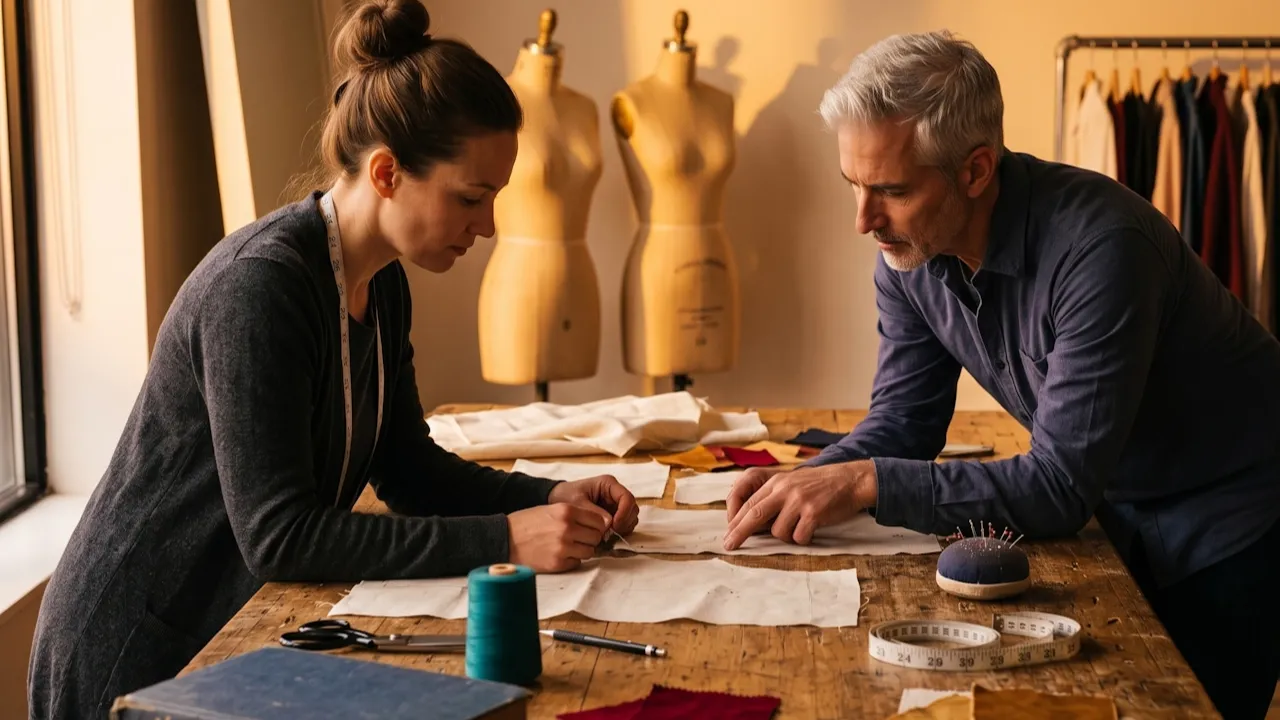
This month, an estimated 9,000+ fashion graduates left UK universities and walked straight into the toughest entry-level market this industry has seen in years. And it isn't because the jobs disappeared.
Graduate Fashion Week turned 35 this June. Nine thousand-plus new graduates, degrees in design, buying, merchandising, textiles, sustainability. Digitally fluent, AI-literate, more switched on than any cohort before them. By every measure that used to matter, this is a strong class.
And they're applying into a market where the average graduate vacancy in the UK now attracts around 140 applications, a record high, with retail roles among the hardest hit. Vacancies are down. Applications are up. That part of the story you've probably already clocked.
What's less obvious is why. It isn't simply that fewer roles exist. It's that the roles left standing have quietly changed shape underneath the job title.
The Job Didn't Vanish. It Got Promoted.
PwC's 2026 AI Jobs Barometer, published this June after analysing more than a billion job postings, gives this shift a name: seniorization. In the occupations most exposed to AI, entry-level postings are now seven times more likely to demand skills that used to appear only later in a career: strategic judgement, stakeholder management, and leadership. In those roles, over half of the newly-required skills are ones a worker would once have needed a decade to earn.
Fashion sits squarely inside that exposure. Pattern development, trend analysis, first-pass research, sourcing admin, the early spreadsheet-and-summary work that used to be a junior's whole first year, is precisely what generative tools now do fastest. The entry-level fashion job hasn't closed. It's been rewritten to ask a 22-year-old for the judgement of someone with fifteen years behind them.
The Rung That Taught Everyone Something Is Gone
Business of Fashion reported in February that hiring has slowed sector-wide as AI reshapes what entry-level work even is, pushing graduates toward old-school networking and unconventional routes just to get a foothold. Strada Education Foundation's research director, quoted this year in the Washington Monthly, put it plainly: entry-level roles are becoming mid-level roles.
Here's why that should matter to you specifically, not just to graduates. The old first job was never officially a training programme. Nobody called it mentorship. It was: do the unglamorous task, have someone more senior check it, get told why it was wrong, do it again. That correction loop, repeated for a couple of years, is how tacit knowledge has always moved from one generation of fashion professionals to the next. Nobody wrote it down. It just got absorbed, standing next to someone who'd already made the mistake.
This series has spent nine instalments arguing that this kind of pattern recognition, built through years of decisions and near-misses, is the one thing AI cannot replicate. That's still true. What we haven't said out loud is what happens when the entry point where that transmission used to happen quietly gets automated away before it can happen at all.
So Who Teaches It Now?
Graduate Fashion Week's own organisers said it this year: creativity is no longer enough on its own. Employers want graduates who understand not just design, but how a garment is sourced, costed and actually brought to market, the commercial judgement that used to arrive gradually, through the rung that's now disappearing.
That's not a graduate failing. It's a transmission problem, and transmission problems need someone to stand in the gap. Usually, this series asks what your unautomatable expertise is worth on the open market. This time, ask it differently.
If the job that used to teach entry-level people how this industry actually works no longer does that job, who does? And somewhere in your own career is a 'why we do it this way' that a junior would once have absorbed just by working alongside you for two years. Do you know which piece of your expertise that is, and whether anyone still has the chance to learn it the old way?
If you're not sure, that's exactly what the Fashion Expertise Map at Bridging the Gap was built to help you find.
Note: HESA does not publish fashion as a standalone subject figure: it sits within the broader 'Design studies' category. The 9,000+ figure above is the best current estimate available, corroborated independently by two sources, but is not an official government headcount.
Related blogs on Bridging the Gap:
- The Knowledge You're Selling Has A Shelf Life Too
- Fashion Schools Can Teach Enterprise. They Cannot Teach the Part That Actually Matters
- Why Your Fashion Career Is Working Against Your Online Course
You can now map your expertise at Bridging the Gap, get a free account, and start positioning yourself as THE expert in your specific field who will bridge the gap. Also, get free research on the commercial viability of short courses in your field. Click here to learn more.
Not Sure Where to Start?
Most of the educators I speak to have been thinking about this for longer than they'd like to admit. If that's you, a 30-minute conversation is often all it takes to get some clarity. I'll talk through your idea, your concerns, and whether now is the right time to move forward.
Thinking About Building an Online Course?
We write regularly about the real decisions involved in turning fashion expertise into online learning, what works, what doesn't, and what most people underestimate before they start. If you're considering this seriously, sign up and we'll send you practical, honest guidance as we publish it.
No noise. Just useful thinking for fashion professionals who are ready to do this properly.
We hate SPAM. We will never sell your information, for any reason.
Author