The Ballet Outfit That Never Takes a Bow, Until You Teach It
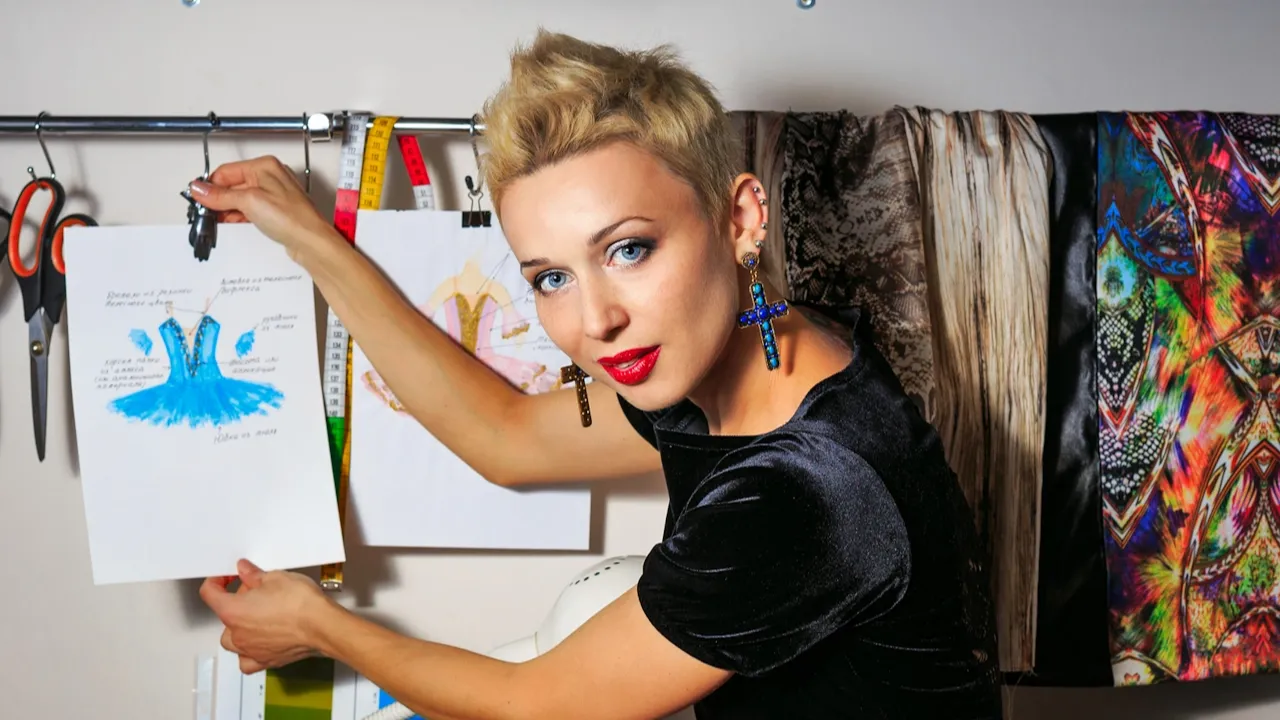
I’ve known her for many years: a friend, a former student at Uni, a budding fashion professional, and someone whose work I’ve always admired since the day I met her.
She has this way of making everything she designs fabulous, and her clients feel seen without saying much at all. You notice it in the way she helps with her client, adjusts a hem, or recommends something you never would have thought of or considered.
One afternoon, I was in her studio in Italy, chatting with her while she waited for a client, who had arrived to try on her new ballet dress. The room was full of clothes racks, sketchbooks of ballet dresses, boxes of samples, and rolls of fabric. Mostly, I was just sitting, chatting and watching.
Her client arrived, had an espresso, tried on the outfit she adored, stepped out of the fitting room and paused in front of the mirror. No immediate reaction. Then, softly, she said:
“This feels like me again. I haven’t felt like this in a while.”
It wasn’t dramatic. But it hit me. My friend transforms people repeatedly, and almost none of it is recorded, preserved, or shared beyond that room.
Seeing Expertise In Action
I’ve been in fashion for many years, mostly designing accessories, bags, belts, and small leather goods. I’ve spent countless hours sketching, sourcing, prototyping, and editing pieces until they felt right. Over time, I learned to make decisions instinctively: the shape of a strap, the texture of a lining, the subtle detail that gives a piece personality.
Watching my friend, I noticed the same thing. She makes decisions in seconds, without hesitation. She trusts her eye, and she trusts people to trust it too. It’s effortless unless you’re trying to explain it. Then it suddenly feels impossible.
And that’s exactly the problem I realised: the work we do quietly, even when it changes lives, is invisible if it doesn’t have a format that lets others learn from it.
The Moment I Knew I Had To Share
We’d talked a few times over coffee about the idea of creating a course or workshop. She was hesitant, worried that translating her instincts into steps would somehow flatten her work. “It’s subtle,” she said. “I don’t want to oversimplify it.”
I thought about my own journey as an accessory designer. Years of sourcing, sketching, editing, and styling all lived in my head, in notebooks, or on tables. The process that felt natural to me was invisible to anyone else.
That’s when I realised: if someone like her, someone with deep experience and instincts, could capture her process in a course, it wouldn’t replace her work.
It would actually preserve it, structure it, and make it teachable. And it could help so many people who are still learning what we already know.
That realisation is what pushed me to create my first online course many years ago. I broke down everything I’d done instinctively all that time before: sourcing, editing, styling, decision-making into concrete lessons.
At first, it felt strange to name and explain what had always been automatic. But as I did it, patterns emerged. I could see my work clearly for the first time. And once it had language, it could be shared.
Why Creating A Course Matters
Sharing expertise doesn’t mean giving it away. It’s the opposite. The process of structuring a course forces you to clarify what you know, and in doing so, your knowledge grows.
For my friend, it could mean the same. Her instinctive skill, the clarity she gives clients in a single fitting, could become a repeatable process that helps dozens or hundreds of people. Not because she’s changing how she works, but because she’s putting it into a form people can follow.
For anyone in fashion, the lesson is clear: your years of experience, your instincts, and your judgment aren’t just tools for your own work. They’re lessons waiting to be shared. A course lets your expertise travel further than your hands ever could.
What Does This Mean For You?
If you’ve been quietly building your skill for years or even decades, designing, styling, advising, creating, it’s easy to think: “This is just what I do.”
But what you do naturally, the things that seem obvious to you, is exactly what someone else is still trying to figure out.
Turning that work into a course doesn’t diminish it. It gives it shape, structure, and reach. It preserves your expertise and multiplies its impact.
Sometimes, the most meaningful thing you can do with your experience isn’t another collection or client meeting.
It’s giving someone else the tools to finally see themselves clearly through your guidance, your process, and, yes, your course.
If you’ve ever thought about sharing what you know, even just a small part of it, consider starting today. You don’t need a polished plan or perfect content. Start with one lesson, one workflow, or one decision-making process you already do instinctively.
Your experience is worth preserving. And someone else is ready to learn from it.
If you would like to have a chat about your ideas for creating an online course or a coaching programme, let us know, and we would be delighted to help you.
Not Sure Where to Start?
Most of the educators I speak to have been thinking about this for longer than they'd like to admit. If that's you, a 30-minute conversation is often all it takes to get some clarity. I'll talk through your idea, your concerns, and whether now is the right time to move forward.
Thinking About Building an Online Course?
We write regularly about the real decisions involved in turning fashion expertise into online learning, what works, what doesn't, and what most people underestimate before they start. If you're considering this seriously, sign up and we'll send you practical, honest guidance as we publish it.
No noise. Just useful thinking for fashion professionals who are ready to do this properly.
We hate SPAM. We will never sell your information, for any reason.