Why Fashion Schools Fall Short, and Why Industry Experts Are the Missing Link
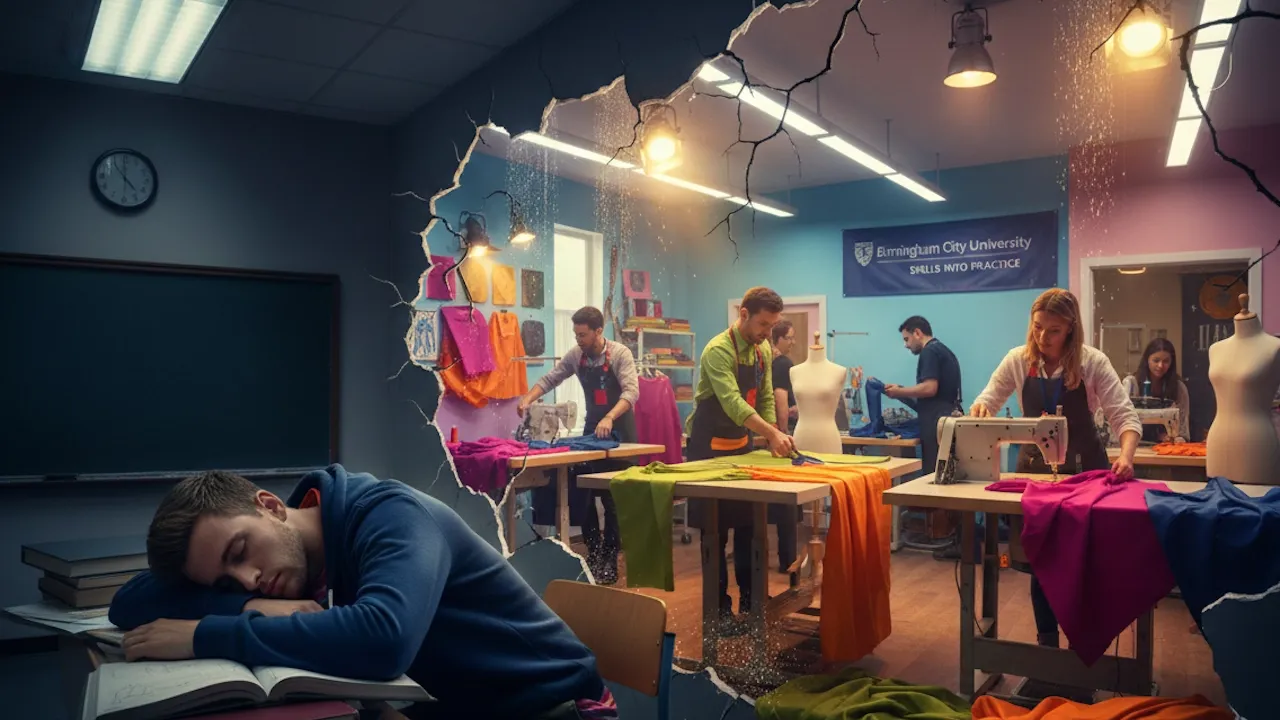
For a long time, fashion education followed a fairly predictable path. You studied at a university or fashion school, learned the theory, developed your skills, graduated and then figured out how the industry actually works once you were on the job.
That model has been quietly breaking down for a long time. Not because universities are failing, but because the fashion industry itself has changed. Roles are more specialised, workflows are faster, technology moves quicker than curricula can adapt, and employers increasingly expect graduates to arrive with practical confidence, not just conceptual understanding.
Recent academic research has now put structure and evidence behind what many fashion professionals, educators and graduates have sensed for years: there is a clear gap between what formal fashion programs teach and what the industry actually requires.
And inside that gap sits a major opportunity for short, expert-led online courses created by experienced fashion professional themselves.
What the Research Tells Us
A 2023 thesis from Kent State University, Bridging the Gap Between Fashion Design Curricula and Industry Requirements, analysed fashion design curricula alongside real job postings to see how closely education aligns with employer expectations.
You can read the full thesis here.
The findings were consistent and telling. While fashion programs do a solid job of teaching foundations employers are looking for something more applied. They want graduates who can translate knowledge into action, adapt quickly, use industry tools confidently, and operate effectively within real teams and commercial constraints.
This isn’t a criticism of education. It’s a reflection of its limits.
Formal programs must be broad, assessable and standardised. Industry work, by contrast, is contextual, messy and full of judgement calls. You know that. No syllabus can fully prepare someone for that reality though/
Where Traditional Fashion Education Inevitably Falls Short
The research highlights several areas where graduates often feel underprepared, and where employers notice the difference most quickly. These include applied design research, real use of industry software and systems, technical workflows, professional communication, and problem-solving under pressure.
What’s important here isn’t the individual skills themselves, but the pattern behind them.
These are not things you learn once and remember forever. They’re learned through repetition, exposure, mistakes, and lived experience. They’re shaped by context: the brand you work for, the team you’re in, the deadlines you’re under, the compromises you have to make.
And that’s precisely why they’re difficult for universities to teach deeply whether online or in-person.
Why This Creates a Huge Opportunity for Online Courses
This is where many fashion professionals underestimate the moment we’re in.
Short online courses are not meant to replace degrees. Their power lies in doing something very different: helping people bridge the gap between knowing and doing.
An industry expert doesn’t need to teach “fashion” in its entirety. They only need to teach the part they know intimately. That's the part they’ve lived.
That might be:
-
How design decisions are actually made under commercial pressure.
-
How production really works once a style leaves the studio.
-
How retail environments shape visual decisions.
-
How communication breaks down between departments and how to prevent it.
-
How junior staff can avoid the mistakes that slow them down.
These insights are incredibly valuable precisely because they’re specific..
“But My Experience Isn’t Mentioned in the Research…”
This is the most common mental block and the most important one to dismantle.
The thesis doesn’t list every fashion role or specialism. It doesn’t need to. What it identifies is a structural gap between education and industry reality.
If you’ve ever:
-
Learned something the hard way on the job.
-
Thought “they never taught us this”.
-
Helped a junior colleague navigate something confusing.
-
Translated theory into something workable.
-
Adapted a process because the official one didn’t fit reality.
…then your experience sits squarely inside that gap.
The opportunity for online courses isn’t limited to the categories named in the research. It extends to any area where lived experience matters more than theory alone. Your experience has been shaped by the context of your role(s) in industry or education. Shaped by the brand you've worked for, the teams you've been in, the deadlines you've been under, and the compromises you've had to make. All repeatedly and throughout your career.
Why Learners Are Actively Looking for This Kind of Teaching
Graduates, early-career professionals and career changers are not rejecting universities. They’re supplementing them.
They want learning that:
-
Feels immediately relevant.
-
Reflects how work actually happens.
-
Builds confidence, not just knowledge.
-
Helps them perform better, faster.
That’s why practitioner-led courses resonate. They speak the language of the workplace. They acknowledge uncertainty. They show how decisions are made when there isn’t a perfect answer.
Short courses succeed not because they’re short but because they’re focused.
The Real Insight from the Research
From a commercial perspective, the research supports something we see repeatedly in practice. People will pay for clarity, confidence and real-world readiness. A short course doesn’t need thousands of students to be worthwhile. It needs a clear problem, a credible expert, and a defined outcome. When those align, even modest audience sizes can generate meaningful income. And unlike traditional teaching, this kind of course is scalable. Your experience becomes an asset that can help many people without requiring more of your time each time.
The most important takeaway from the thesis isn’t a list of missing skills.
It’s this:
Fashion education and fashion work operate under different rules and students need both perspectives to succeed.
Universities provide foundations. Industry experts provide readiness.
And short, expert-led online courses are the bridge between the two.
So Where Is the Opportunity?
The opportunity lies wherever theory ends and reality begins. If you know how things actually work, and not just how they’re supposed to work, there is likely a course inside your experience.
And right now, the research shows that learners are actively looking for exactly that.
Thinking About Turning Your Experience Into a Course?
At We Teach Fashion, we help fashion professionals and educators identify the most valuable parts of their experience and turn them into focused, credible online courses that genuinely help learners and generate income.
Contact us at We Teach Fashion
Afterall, the gap is real. The research confirms it. And the opportunity is bigger than most people realise.
Not Sure Where to Start?
Most of the educators I speak to have been thinking about this for longer than they'd like to admit. If that's you, a 30-minute conversation is often all it takes to get some clarity. I'll talk through your idea, your concerns, and whether now is the right time to move forward.
Thinking About Building an Online Course?
We write regularly about the real decisions involved in turning fashion expertise into online learning, what works, what doesn't, and what most people underestimate before they start. If you're considering this seriously, sign up and we'll send you practical, honest guidance as we publish it.
No noise. Just useful thinking for fashion professionals who are ready to do this properly.
We hate SPAM. We will never sell your information, for any reason.