Most Fashion Expertise Dies in a Room

The Renaissance lasted because people wrote things down, recorded their methods, and passed their knowledge on properly. What was once taught from master to apprentice was eventually documented. Workshops became schools. Skills were shared on purpose, not left to chance.
Fashion talks a great deal about its history and heritage. But it doesn’t always create proper systems to protect and pass on its deepest expertise.
And once I saw that, I couldn’t unsee it.
Let us not dress it up.
Some of the finest thinking in fashion dies quietly.
It is spoken once, in a lecture theatre heavy with concentration. It is demonstrated at a pattern-cutting table while a student holds their breath. It is dissected in a buying meeting where numbers and instinct collide. It is explained in front of an archive rail, hands hovering over fabric that will never be made again.
And then the room empties...
Term ends. The contract concludes. The expert retires. The knowledge does not make a scene. It does not announce its departure. It simply fades away with the fashion expert who carried it.
We like to believe fashion reveres heritage. We celebrate archives, lineage, and ateliers with history stitched into their walls.
But when it comes to preserving the minds behind that heritage, the methodologies, the judgment, the hard-earned frameworks, we are far less diligent.
“We curate garments. We do not curate thinking.”
And that is the quiet contradiction at the heart of our fashion industry.
I did not fully understand the weight of that until we moved to Florence for a while and began homeschooling our then twelve-year-old daughter.
Florence Does Not Tolerate Superficiality
Florence doesn’t care for things that simply look beautiful. It expects there to be real structure behind the beauty, discipline beneath the drapery, thinking behind the silhouette. And standing there with my daughter, studying proportion and composition, it became clear that fashion, at its highest level, demands exactly the same.
Inside the Uffizi, we stood for hours in front of Botticelli’s Primavera. The museum would empty toward closing time, and the room would grow quiet. My daughter would sit on the bench opposite and sketch the drapery again and again.
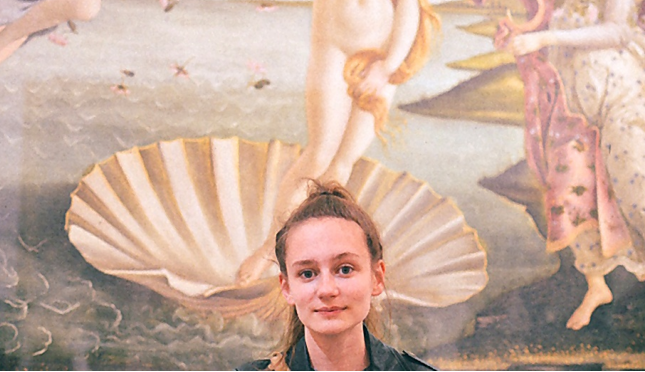
Not copying. Interrogating:
Why does the fabric look like it’s moving, even though it isn’t?
How can something painted flat feel like it’s flowing?
How does it all look so balanced when there’s so much going on?
She was learning something essential:
Beauty is constructed through discipline.
Constructing a Serious Fashion Education
When you remove institutional scaffolding and build your own education, the questions become uncompromising.
- What must be taught first?
- What is foundational, and what is decorative?
- What separates instinct from mastery?
We began with structure.
- Pattern cutting wasn’t about making something look nice; it was about understanding the measurements and the maths behind the shape.
- Garment construction wasn’t just sewing; it was learning how pieces fit together and why they hold.
- Design wasn’t random inspiration; it was making decisions step by step, in the right order.
- Fashion history wasn’t just about old clothes; it was about understanding the culture and politics that shaped them.
- And the industry wasn’t glamorous; it was money, negotiation, production, and systems working behind the scenes.
Later, my daughter collaborated with a Dutch brand on a sock design project. It was not theoretical. There were specifications, production constraints, and commercial expectations. Her designs were manufactured and sold internationally.
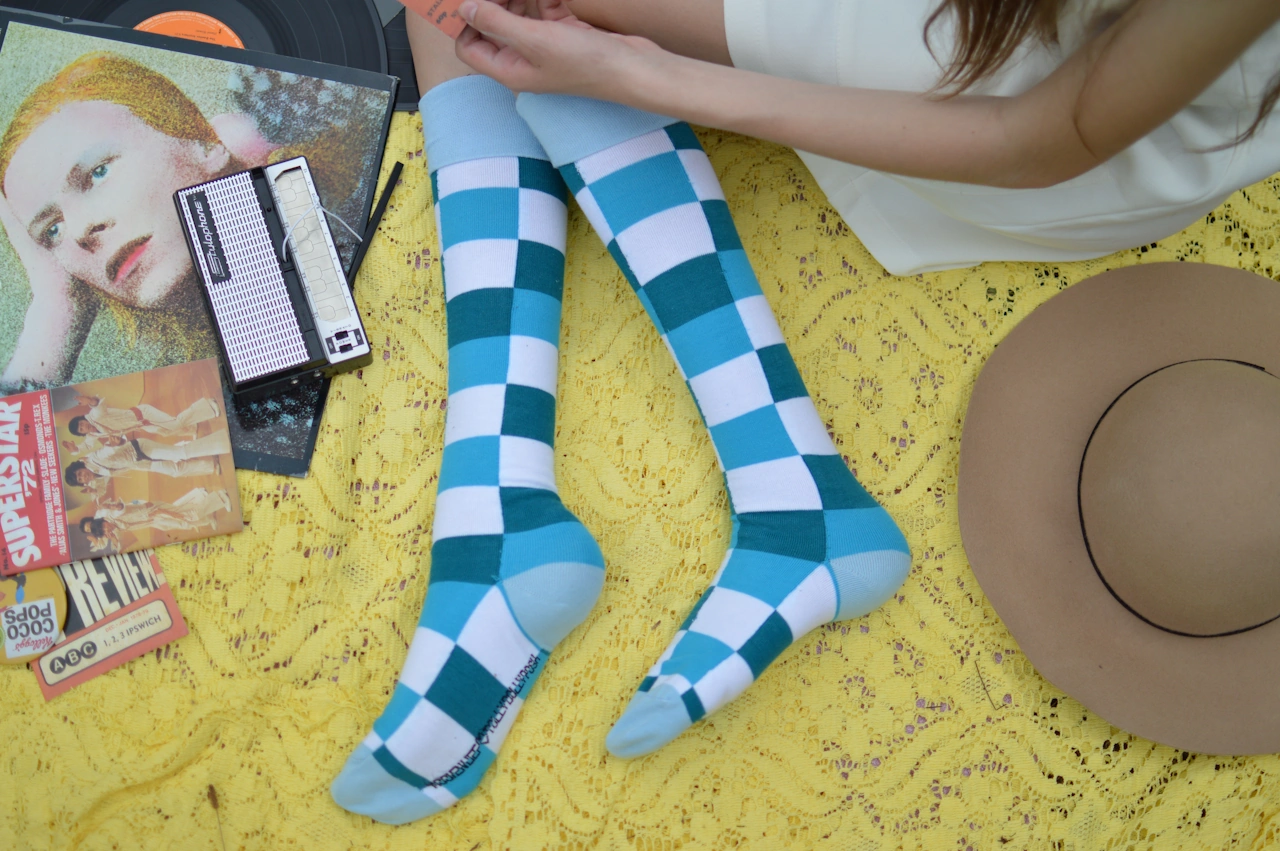
That result did not happen because she was “creative.” It happened because the process was structured.
I guided her through it step by step, just as I had been taught at university and later developed through years of teaching. We focused on thorough research, narrowing ideas rather than chasing them, turning drawings into clear technical instructions, and considering whether the design would actually sell.
Creative ideas are common.
Knowing how to shape them into something that works is not.
And as I worked with her, a sobering question surfaced.
If I did not have this background, where would we have found it?
There was no serious, expert-led digital programme that treated fashion as a discipline rather than a pastime.
For an industry of this intellectual depth, that absence was extraordinary.
The Pattern Cutter We Failed to Preserve
During that time, I kept thinking about my pattern-cutting tutor way back in my University days.
She must now be in her nineties!
She was incredibly precise. She could spot what was wrong straight away. She fixed the design's thinking before worrying about the stitching. She just knew how the fabric should sit and where the tension needed adjusting.
Her classroom wasn’t just a place to learn steps. It was where real skill and experience were passed down.
And when she retired, her knowledge was not formalised into a masterclass. It was not structured into a digital archive. It was not preserved as intellectual infrastructure.
It lives only in the memories of those who happened to sit in that room.
Fashion prides itself on craftsmanship.
Yet it allows its most advanced thinking to evaporate.
That should unsettle us.
Fashion’s Intellectual Blind Spot
Fashion isn’t short of talented experts. What it lacks is a proper way to record and preserve what they know.
Senior lecturers spend years improving how they teach and explain their subject. Luxury buyers build a deep instinct for pricing and profit. Garment technologists fix complex production problems that most people never see.
Curators place fashion within wider cultural and historical contexts. Consultants develop their own methods and frameworks that quietly influence how brands operate.
But much of that knowledge remains embedded in institutions.
When people change roles or retire, their knowledge often fades away, not because it’s outdated, but because it was never properly recorded or structured to last.
In other fields, experts write books, record their methods, and build platforms to protect their ideas.
Fashion often assumes that simply being present in a room is enough to convey knowledge.
It isn’t.
At the Senior Level, This Becomes Strategic
If you’re at the beginning of your career, this might sound like an interesting idea.
But if you’ve been in the industry for years, it’s a practical issue.
You’ve spent a long time sharpening your thinking, solving complex problems, building your own ways of working, guiding others, and improving systems. That experience and knowledge have real value.
The question is whether it belongs to you or only to the institution you currently work for.
If it does not, it remains temporary.
Online education, when done properly and seriously, isn’t just a trend.
It’s a way to protect and preserve knowledge. But building something that lasts needs professional support.
Most senior fashion professionals don’t want to spend their time learning platforms or becoming marketing experts, and they shouldn’t have to.
Your real value is in the depth of your experience and expertise.
What you require is infrastructure.
Catwalk to Commerce: Formalising Authority Before It Fades
Catwalk to Commerce was created for this precise stage in your career — when experience needs structure.
It isn’t a generic template.
And it’s far more than a side project.
It is a Done-For-You intellectual infrastructure service designed for experienced fashion professionals who are ready to formalise their expertise properly.
You bring decades of refined thinking.
We build the structure around your expertise, shaping it into a clear educational framework, a professionally branded digital platform, and a learning experience that truly reflects your standards. We also put the right launch strategy in place so your authority is positioned at the level it deserves.
This isn’t about casually trying out an online course.
It’s about turning years of experience into something you own, a lasting intellectual asset.
Done carefully. Done professionally.
Before it fades into institutional history rather than carrying your name.
The Question That Matters
Right now, somewhere in the world, there is a serious learner studying proportion with the same focus my daughter gave to Botticelli.
They aren’t looking for quick tips or surface-level advice.
They’re looking for depth. For structure. For someone who truly understands the discipline.
Your expertise could serve them, without question.
What matters is whether that knowledge stays within the walls you currently teach or work in, or whether it’s built into something that lasts beyond them.
If you recognise the value of what you’ve built over the years, then this isn’t something to leave for “one day.”
It’s a considered, strategic step.
Catwalk to Commerce is designed for professionals who are ready to take that step.
In fashion, legacy isn’t just a feeling or a story we tell. It’s something that has to be built with intention. And if it isn’t built properly, it can easily be lost.
You’ve already done the hard part; you’ve built the expertise. Now it’s about putting the right structure around it so it can truly last.
If you feel ready to turn everything you’ve learned over the years into something you own and can pass on properly, let’s have a conversation. Get in touch, and we’ll talk through what that could look like for you.
Not Sure Where to Start?
Most of the educators I speak to have been thinking about this for longer than they'd like to admit. If that's you, a 30-minute conversation is often all it takes to get some clarity. I'll talk through your idea, your concerns, and whether now is the right time to move forward.
Thinking About Building an Online Course?
We write regularly about the real decisions involved in turning fashion expertise into online learning, what works, what doesn't, and what most people underestimate before they start. If you're considering this seriously, sign up and we'll send you practical, honest guidance as we publish it.
No noise. Just useful thinking for fashion professionals who are ready to do this properly.
We hate SPAM. We will never sell your information, for any reason.
Author