From Claridge’s to the Cloud: Why Fashion Experts Who Ignore Online Education Are Risking Obsolescence.
At two in the morning, the fashion studio felt like a completely different world.
The air was dusty with bits of fabric, and the machines were still running with that steady metallic buzz that never really stopped. A coffee sat cold on my desk because I’d forgotten to drink it. Time felt weird, like it had slowed down just for me.
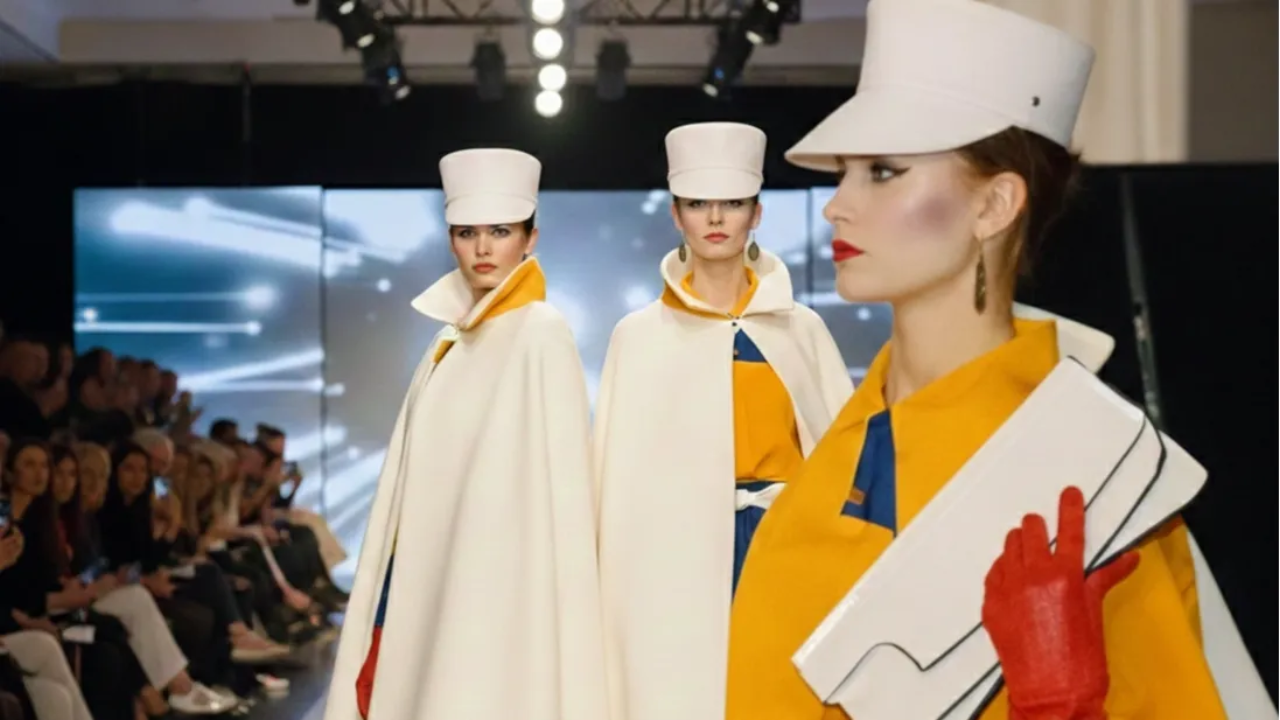
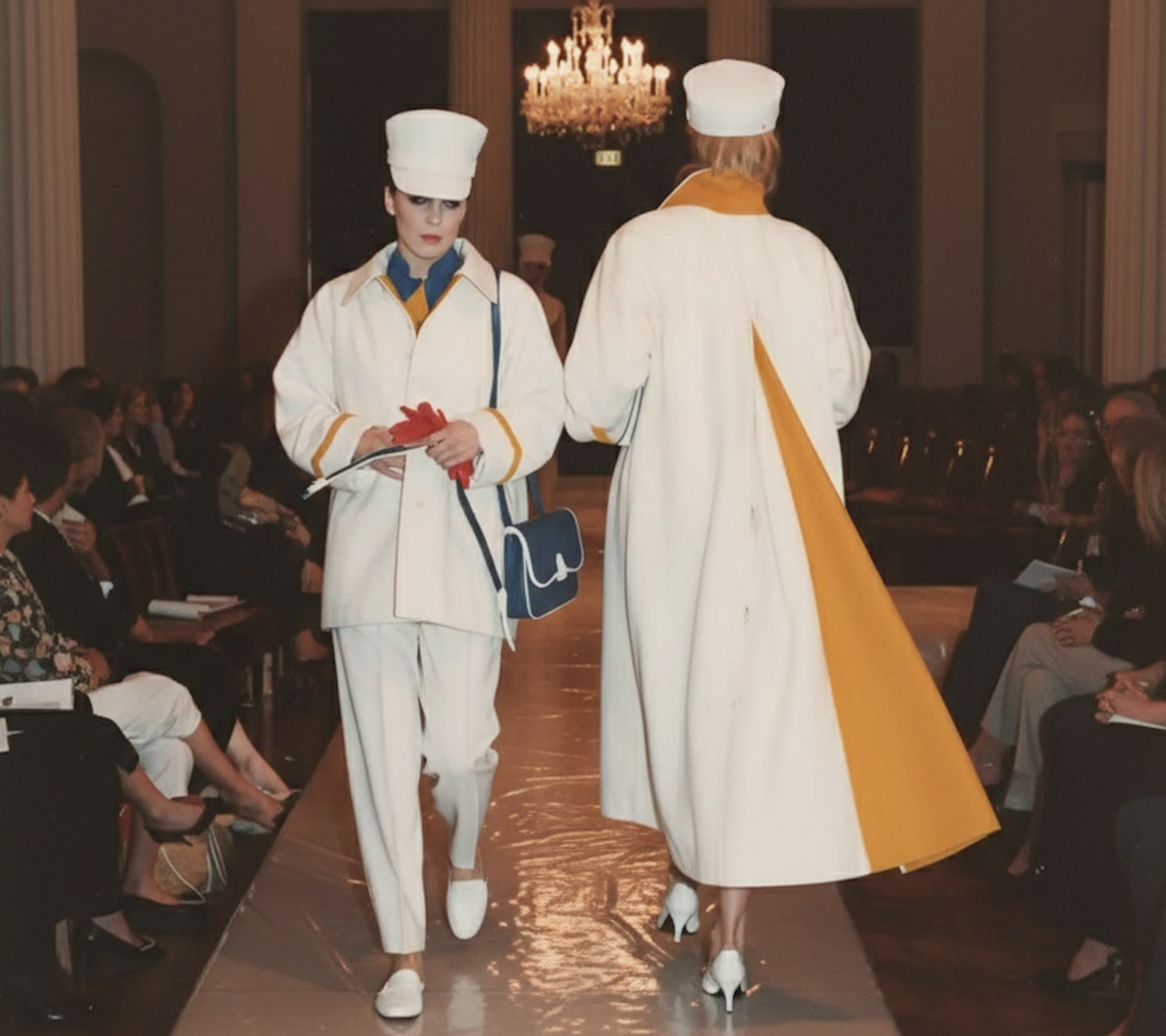
In my final year at fashion university, those late nights became the norm as I worked on my military-inspired collection: broad-shouldered coats, capes that moved as I wanted, jackets and skirts I kept adjusting to get the proportions right, plus leather hats, shoes, and handbags. I felt dizzy and overwhelmed with the pressure building inside.
It was all building toward one moment: showing the full collection at Claridge’s in London. My sponsor and designer job was with Roger Saul of Mulberry.
From the outside, it looked like this was the greatest opportunity. Inside the pattern-cutting room, it was a prolonged negotiation with reality.
My sketchbook was already overflowing with my designs, and I honestly know I had some great ideas. I now had to turn them into real clothes. The second fabric replaced paper; the pressure mounted, and everything grew harder.
Three weeks to go to the finish. Lines that looked perfect in my drawings suddenly didn’t sit right on the body. Pattern cutting exposed every mistake I didn’t even know I’d made. I’d sew something together, feeling hopeful, step back, and realise it just wasn’t working. So I’d unpick it and start again. It was frustrating, sometimes exhausting, but it forced me to slow down and actually learn.
It was a learning curve that started with understanding that creativity wasn’t just about having ideas; it was about the discipline to make them real.
When my custom-dyed fabric finally arrived, a colour that had only existed in my head until that moment, cutting into it felt like a huge moment. There was no undo button. As I started putting the collection together piece by piece, I could finally see it coming to life, and it felt like the finish line was getting close.
Then my pattern-cutting tutor looked over my almost-finished work and said:
“If we want your collection to be absolutely perfect, we’ll need to start again.”
Just like that, months of work and late nights suddenly felt like practice runs.
Starting over honestly felt brutal. I’d put so much into those pieces. But deep down, I knew what they were saying was true; the collection wasn’t quite at the level I wanted it to be, if I wanted perfection.
So I took it apart. I rebuilt it. And I kept refining it until it matched the standard I knew it needed to reach.
When the collection stepped under the chandeliers at Claridge’s, it carried a wow and structural clarity that only reconstruction can produce.
That experience revealed a principle that now sits at the centre of online course creation for fashion experts:
Excellence is engineered through systems that absorb revision. It is designed, not improvised.
And fashion education is now confronting the consequences of forgetting that.
Fashion Education Is Undergoing a Structural Reset
The way people learn fashion has changed.
Aspiring designers and fashion students are no longer limited by geography. They actively seek online fashion courses, digital fashion training, and specialised instruction from working experts.
Recent research backs this up in simple terms: online and blended learning can work just as well as in-person teaching when they’re designed properly, and it’s the quality of the teaching, not the technology, that really makes the difference.
The key variable is design.
Uploading videos is not education. A scattered set of lessons is not a curriculum. What separates a forgettable digital product from a transformative fashion education platform is the learner journey, the deliberate sequencing that converts information into capability.
Most online fashion courses fail not because experts lack knowledge, but because they refuse to design learning experiences that actually work for students.
“Fashion is about change, and change is the engine of survival.” Karl Lagerfeld
If fashion is all about reinventing itself everywhere else, then ignoring that same change in education just feels like a risky move.
Why the Learner Journey Is the Competitive Advantage
Fashion expertise isn’t just information you can write down, it’s instinct, judgement and hands-on skill.
Learning research points to a clear pattern: people retain more when they’re actively involved and when teaching is organised in deliberate, progressive stages.
A large study on active learning found that students in structured, hands-on environments consistently outperformed those in traditional lecture-based settings. In fashion education, that insight is crucial. Skills like pattern cutting, garment construction and design judgement aren’t absorbed through observation alone; they develop through guided, step-by-step practice supported by a strong instructional structure.
A successful online course for fashion designers must:
-
Teach skills step by step in a clear order
-
Plan for the mistakes students are likely to make
-
Give regular, structured feedback as they learn
-
Help students see their progress as they move forward
If your expertise cannot be translated into a structured learner journey, it is not scalable education; it is performance-dependent on your presence.
The learner journey is the pattern cutting of education. Without it, even extraordinary expertise collapses into fragments.
The Commercial Reality Most Fashion Experts Avoid
The global e-learning market is projected to exceed $400 billion this decade. Within that expansion, practitioner-led education occupies a premium tier.
For fashion experts, this means the ability to:
-
Create high-value signature online courses
-
Offer focused masterclasses in specialist skills
-
Build membership communities with steady recurring income
-
Share structured course programmes with schools or institutions
Yet hesitation remains.
Which leads to the third debate-triggering statement:
An industry obsessed with valuing craftsmanship routinely undervalues its own intellectual property in education.
A well-designed digital fashion academy does not dilute craft. It extends it.
The professionals already building structured online academies are not chasing trends. They are building infrastructure around their expertise.
Turning Fashion Expertise Into Scalable Digital Courses
This is where implementation matters.
Our Catwalk to Commerce™ 'Done For You' service helps fashion experts turn their knowledge into professional online courses:
Our focus isn’t just on setting up the platform. It’s on designing the learning journey and the digital structure around it, so your craft stays true to itself while reaching a wider audience.
The Closing Line That Will Divide Opinion
Fashion has always rewarded the people willing to move before it feels safe.
In the next decade, fashion experts who refuse to digitise their knowledge won’t be preserving tradition; they’ll be writing themselves out of the conversation in an industry that’s already moving online.
And the uncomfortable question is this:
If your expertise can’t survive in a digital world, how relevant is it going to be in the future of fashion?
Agree or disagree?
If you would like to have a chat about your ideas for creating an online course or a coaching programme, let us know, and we would be delighted to help you.
Not Sure Where to Start?
Most of the educators I speak to have been thinking about this for longer than they'd like to admit. If that's you, a 30-minute conversation is often all it takes to get some clarity. I'll talk through your idea, your concerns, and whether now is the right time to move forward.
Thinking About Building an Online Course?
We write regularly about the real decisions involved in turning fashion expertise into online learning, what works, what doesn't, and what most people underestimate before they start. If you're considering this seriously, sign up and we'll send you practical, honest guidance as we publish it.
No noise. Just useful thinking for fashion professionals who are ready to do this properly.
We hate SPAM. We will never sell your information, for any reason.
Author