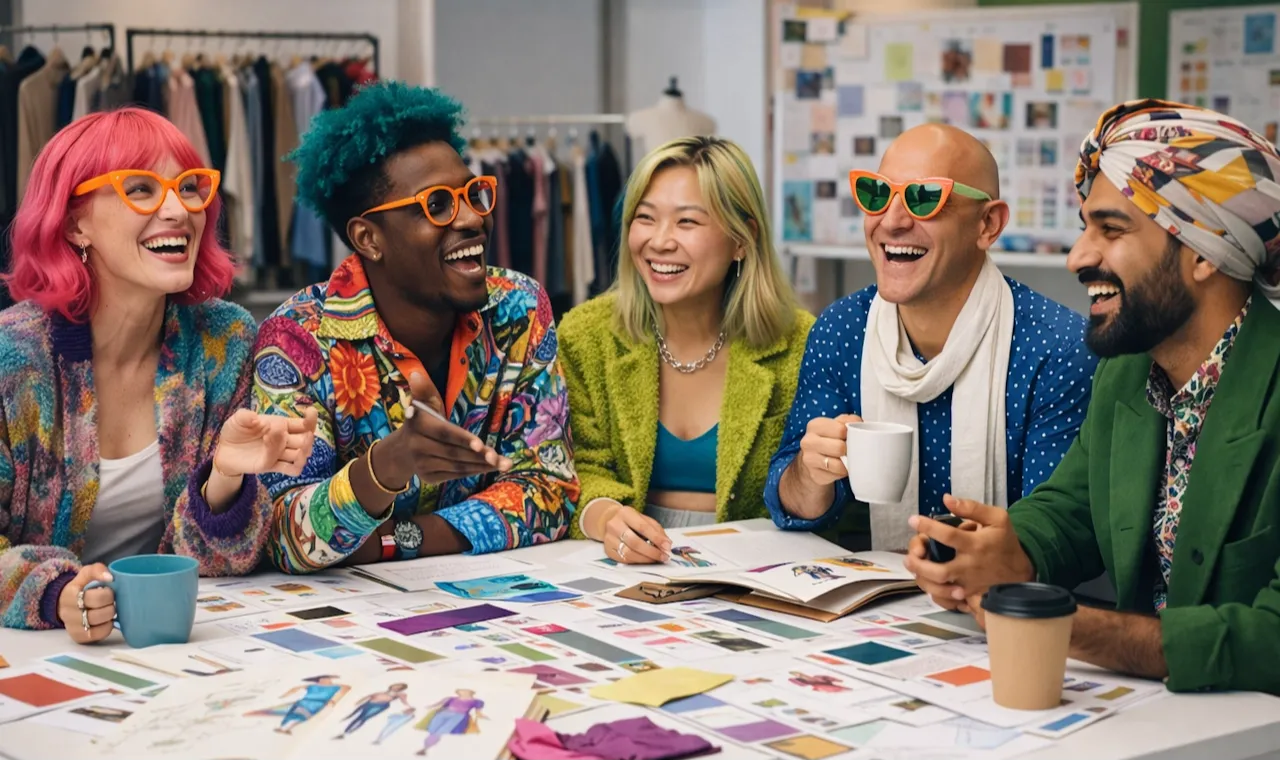
You Didn't Come This Far in Fashion to Be a Copy of Someone Else's Feed
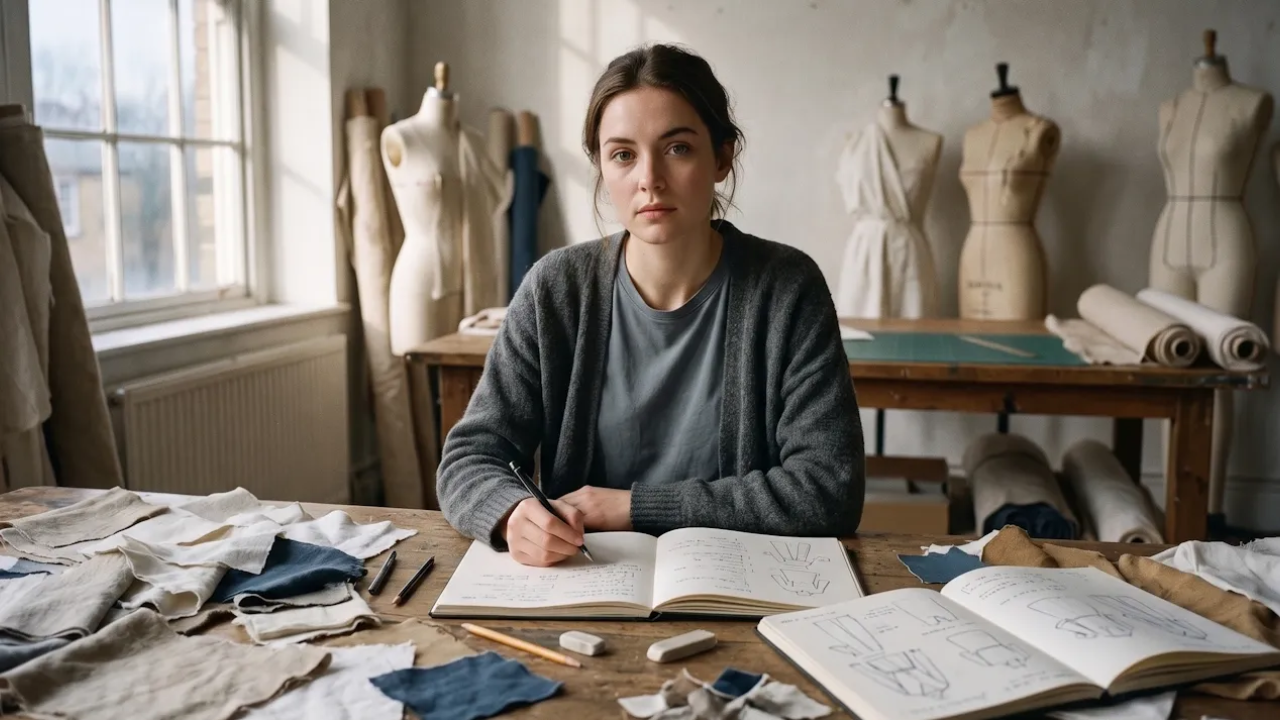
This post is Part Three of The Real Gap — the series on what fashion education isn't telling you and what the industry isn't saying out loud. If you haven't read the earlier posts, Part Two looked at why so many graduates are arriving ready to talk about fashion but not ready to make it, the quiet disappearance of hands-on technical skills from the curriculum and what that costs you on day one of a real job. You can read that here. The most recent post was written for the other side of the room entirely, the hiring managers and senior practitioners watching this problem land on their desks every time a new intake comes through the door. That one is here. This post is for you: the graduate who is finishing, leaving, and trying to find your place in an industry that is harder to break into than anyone in education has quite prepared you for. If you have ever sat with a portfolio you are not sure is really yours, or walked out of an interview feeling like you said all the right things but none of them felt like you, this is the conversation I wish someone had started sooner.
Okay, let's have an honest conversation. This might well be the kind nobody really has with you before you walk through the door of your first proper job in this industry.
Because something is happening to a generation of genuinely talented people, people like you, and it is doing quiet, serious damage to your career before it has even properly started. The frustrating thing? Most of the people who notice it are on the other side of the hiring table, keeping it to themselves.
So I am going to say it instead.
The Feed Is Not Your Portfolio. And Deep Down, You Know That.
Here is the thing about Instagram, TikTok, and every other platform you have been living on for the last however many years. They are extraordinary. Genuinely one of the most remarkable tools a young creative has ever had access to. You can see every collection, every campaign, every styling decision made by every brand on earth, in real time, for free.
And that is also the problem.
Because somewhere along the way, and this is nobody's fault, not really, the act of consuming all of that became a substitute for the much harder, much slower, much more uncomfortable work of figuring out what you actually think.
You saved, reposted, and collected references. You built mood boards that looked stunning. And without anyone telling you this was happening, the habit of looking outward became so constant, so automatic, that looking inward felt almost foreign.
Research published in the Creativity Research Journal in 2024 found that passive, habitual social media use, the kind where you are scrolling and absorbing rather than creating and engaging, negatively affects cognitive flexibility and creative originality. Not marginally. Significantly. It impairs the very pathways in the brain that generate new ideas rather than recombine existing ones.
Which means the more you scroll without making, the harder making genuinely becomes. Your brain is literally being rewired away from originality.
That is not a character flaw for you; it is neuroscience. And it is entirely reversible, 'but' only if you know it is happening.
What Your Portfolio Is Actually Saying
Let me be straight with you about what people looking at your work see, because nobody else will say it clearly enough.
They are seeing a beautiful presentation and the brands you follow. They are seeing recognisable aesthetics because they belong to someone else. What they are not seeing, and what they are quietly desperate to find, is you!
Not a project that starts with a mood board and ends with a mood board. A project that starts with a problem, moves through a process, hits dead ends, finds solutions, and arrives somewhere with costing, construction thinking, range logic, and a point of view that holds up when someone in the room says, " Why did you make that choice?
That kind of portfolio does not come from a feed. It comes from sitting with the discomfort of not knowing the answer yet, and staying there long enough to find one that is genuinely yours.
And here is what science says about that discomfort. Research from the Academy of Management Discoveries has shown that boredom, the genuine discomfort of sitting with an unresolved problem without immediately reaching for your phone, is one of the most powerful catalysts for original creative thinking we know of. The brain, when not fed a constant stream of external stimulation, starts generating internally. That is where your actual ideas live. They have been there all along. You just have not given them enough silence to surface.
"That is the key of this collection, being yourself. Don't be into trends. Don't make fashion own you, but you decide what you are, what you want to express by the way you dress and the way to live." — Gianni Versace
Versace built one of the most recognisable brands in fashion history on exactly this principle. He did not ask the industry what it wanted to see and then provide it. He knew his own mind with such specificity and confidence that the industry had to come to him. That is not arrogance. That is what a genuine point of view looks like when fully developed. And it starts long before the job. It starts right now, with you.
The Stuff Nobody Teaches You Before You Walk In
Here is an honest picture of what you will be expected to do from approximately day one of your first proper role. You will need to write a professional email that takes a clear position and does not need rewriting by someone senior before it goes out. You will need to contribute to meetings in a way that adds something, not simply agree with what was already said. You will need to defend a design decision when someone pushes back, not by pointing to what another brand did, but with your own commercial and aesthetic reasoning. You will need to understand what your creative choices actually cost, how a range comes together commercially as well as aesthetically, and how to communicate with a factory or supplier in writing that gets the result you need.
None of those things comes from a feed. All of them require you to have a point of view. And a point of view requires knowing who you actually are, not who you are performing to be online.
The AI Conversation Nobody Is Having With You Directly
There is a part of this conversation that deserves more than a paragraph, and it is the one nobody is having with you directly.
Artificial intelligence can now produce mood boards instantly. It can aggregate trend data, pull aesthetic references from thousands of sources, generate visual concepts, and assemble the kind of research collages that currently fill most graduate portfolios at a speed and scale no human can match, and at no salary cost whatsoever. This is not a distant possibility. It is happening now, in the studios of the brands you are hoping to work for.
If the primary thing your portfolio demonstrates is curation, gathering, saving, referencing, and assembling the work of others into something visually coherent, then you are not just competing with other graduates. You are competing with a tool that does not need a desk, a briefing, or anyone's management time to function.
This is not said to frighten you. It is said because the response to it is clear and entirely within your reach. The things AI cannot do are the things that only come from a genuinely developed human perspective. Original judgment. The ability to hold a position under pressure and articulate why. The instinct that comes from real experience with material, with process, with failure and revision. The courage to make a decision that cannot be justified by pointing to what someone else has already done. The capacity to walk into a room, read the people in it, and communicate with enough conviction that they trust you.
That is the version of you the industry cannot replace. But it has to be built, and it is built by looking inward rather than outward, which is the opposite of what the scroll is asking you to do every ninety seconds.
On Copying the Outside and Losing the Inside
There is something that happens when your entire creative diet is built from consuming what already exists and is already celebrated. You get very good at recognising quality and develop a sharp aesthetic literacy. You know the references, but you gradually, quietly lose the thread back to your own instinct.
And the professional consequences of that go much further than a weak portfolio.
They show up in meetings where you cannot defend a choice without pointing to something external. They show up in emails where you hedge and qualify because committing to a clear position feels exposing. They show up in design decisions that drift safe, because safe feels less risky than standing behind something that is genuinely, recognisably yours.
"Style is knowing who you are, what you want to say, and not giving a damn." — Orson Welles
Welles never worked a day in fashion. But he understood creative authority more precisely than most people who did. You do not build a distinctive voice by constantly checking what everyone else is doing and adjusting yourself accordingly. You build it by knowing your own mind so thoroughly that external noise becomes secondary input. That is available to you, but not through the feed.
So What Do You Actually Do?
None of this is complicated, but it can be very uncomfortable at first, and uncomfortable is the point.
Start by putting the phone in another room and sitting with a brief, an idea, or a blank page for longer than feels reasonable. Notice what comes up when you cannot immediately reach for a reference. That discomfort is not emptiness; it is your own thinking beginning to surface. Research confirms it. Trust me on this.
Then build something from start to finish. Not a mood board. A project that has a brief, a process, a set of decisions with reasoning, a costing, a final outcome, and a clear articulation of what you were trying to solve and why you made the choices you made. That is what a portfolio looks like when it is speaking for you rather than for everyone you follow.
While you are doing that, learn the commercial language of this industry, costing, range planning, margin thinking, how a buying cycle works, and what a factory actually needs from you in writing. This is not the boring part of fashion. It is the part that makes you genuinely useful rather than decoratively present.
And practise having opinions and defending them. In conversations, in crits, in any room where someone challenges you. Not aggressively with reasoning. With the ability to say I made this choice because, and then finish the sentence with something that belongs entirely to you.
The Honest Truth About What Happens Next
The industry you are walking into is tighter, more competitive, and more demanding than it has been in a generation. Entry-level creative roles are harder to land. The bar for what brands expect from a new hire is higher than it was even five years ago. And the candidates who stand out are not the ones with the most followers or the most beautifully curated feeds.
They are the ones who walk into a room knowing exactly what they think, why they think it, and how to communicate it clearly enough that other people want to listen.
That is built in the quiet. In the discomfort of the blank page. In the hours spent making rather than watching. In the slow, unglamorous work of developing yourself rather than curating yourself.
You already chose a hard industry, and your scroll made it look effortless from the outside. It is not. But neither is finding your own voice, and once you have it, nothing in the room can take it from you.
The feed will always be there. Your own thinking will not wait around forever if you do not practise it.
Go and find out what you actually think. The industry needs it. And honestly? So do you.
"You did not choose one of the hardest industries in the world to spend your career being a copy of someone else's Instagram. Find your voice. Defend it. Build from it. That is the version of you this industry is actually waiting for." — Cheryl Gregory, Co-Founder, We Teach Fashion
Not sure where your gaps actually are? [Download the free checklist here]: ten honest questions about industry readiness that nobody gives you before your first job.
This post is part of The Real Gap series: the conversation about what fashion education isn't telling you and what the industry isn't saying out loud. If you are a brand, hiring manager, or experienced professional who recognises what is being described here, this one is for you.
Read the other posts in the series:
- The Industry Has a New Problem. It Is Not Skills. It Is Identity.
- Why Fashion Graduates Are Arriving Ready to Talk, But Not Ready to Make
- Why Fashion's Skills Gap Won't Be Fixed by Universities
- The Fashion Industry Is Sitting on a Fortune in Untapped Knowledge
Not Sure Where to Start?
Most of the educators I speak to have been thinking about this for longer than they'd like to admit. If that's you, a 30-minute conversation is often all it takes to get some clarity. I'll talk through your idea, your concerns, and whether now is the right time to move forward.
Thinking About Building an Online Course?
We write regularly about the real decisions involved in turning fashion expertise into online learning, what works, what doesn't, and what most people underestimate before they start. If you're considering this seriously, sign up and we'll send you practical, honest guidance as we publish it.
No noise. Just useful thinking for fashion professionals who are ready to do this properly.
We hate SPAM. We will never sell your information, for any reason.
Author