The One They Let Fail. Nobody Was Close Enough To Look.
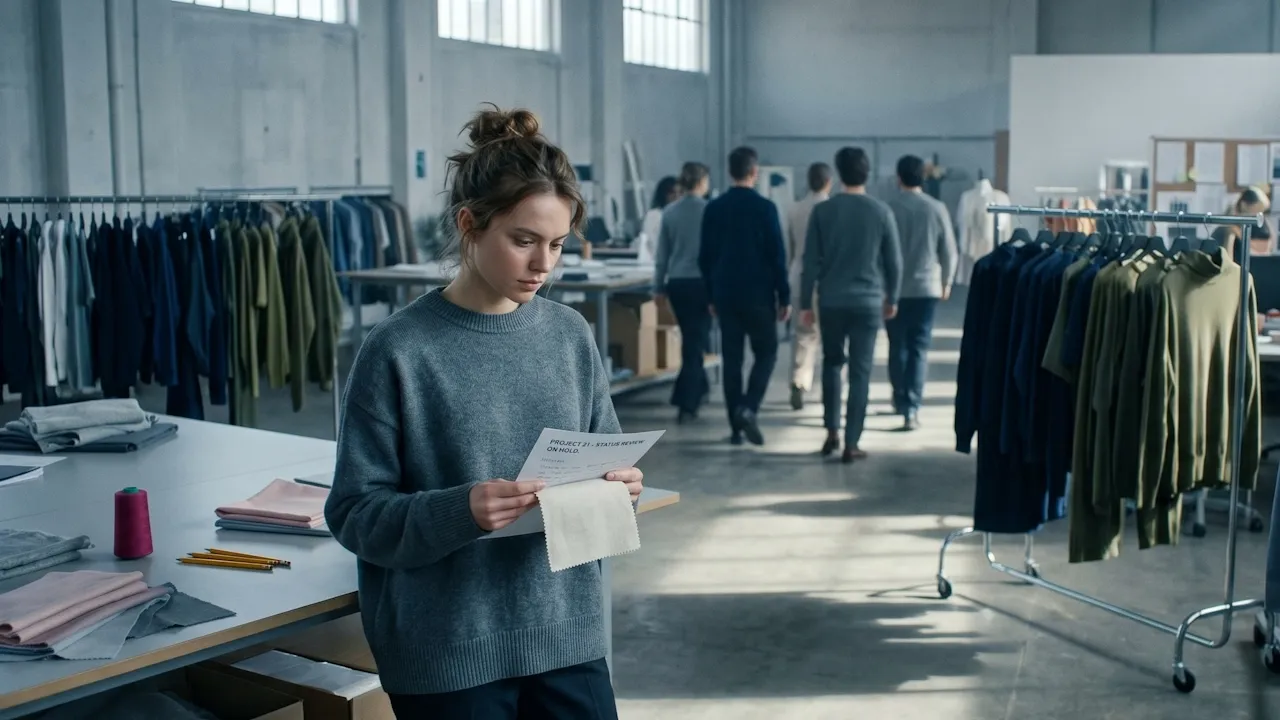
There is a particular kind of failure in early fashion careers that nobody writes about. Not the dramatic kind, not the headline, or the public stumble, not the degree show disaster. The quiet kind.
The junior designer who misread the brief for three weeks before anyone senior noticed. The graduate in her first buying role sent the wrong version of the range plan to the supplier, and discovered the mistake only when the samples arrived incorrectly. The young creative who pitched an idea in a team meeting with complete confidence, walked out of the room two minutes later, and still has no idea, years on, what she did wrong or why everyone went silent.
These failures happen every day inside fashion businesses. And in almost every case, there was an experienced professional somewhere nearby who could have seen it coming.
They just weren't close enough to look.
The Invisible Safeguard That No Longer Exists
There was a version of the fashion industry not that long ago in which proximity to experience was simply built into the way you worked. You sat near people who'd been doing this for twenty years. You watched a senior buyer handle a difficult supplier conversation in real time. You got pulled into a fitting and stood at the back observing, absorbing, and learning things that no course had ever tried to teach you.
That informal apprenticeship model, messy, imperfect, wildly inconsistent, was doing something important. It was putting junior professionals inside the line of sight of experienced ones. And experienced professionals, whether they meant to or not, were providing a kind of protective field. A catch-net. Not through formal mentoring or structured programmes, but simply through being present.
I remember those days when I was a new pattern cutter at the then-fashion brand, Simon Jeffrey, learning on the job from those who had been there for years, guiding me and telling me what to do. The brand produced a wide variety of vintage dresses, blouses, and tailored separates and was commonly stocked by department stores such as House of Fraser and Debenhams.
Remote working changed some of this. Leaner teams changed more. The expectation that graduates arrive ready-made changed the rest.
The result is a generation of early-career fashion professionals navigating situations they were never prepared for, without the informal safety net that once caught the worst of it before it became a defining experience.
Failure Teaches: But Not Always What You Think
There is a received wisdom in creative industries that failure is the best teacher. And there is truth in it, but only a partial truth.
Failure teaches when it is reflected on clearly and honestly, ideally in conversation with someone who has seen the same situation before and can name what actually happened. Without that reflection, failure teaches the wrong lesson. It teaches anxiety instead of adjustment. Avoidance instead of growth. Self-doubt in the place of self-awareness.
Most early-career professionals in fashion do not have access to that kind of honest, experienced reflection. So they carry their failures silently, half-understanding them, building strategies around the wrong conclusions.
This is not a small thing. It is one of the primary reasons talented people leave the industry earlier than anyone expected. Not because the work was too hard. Because the navigation was too lonely.
What Experienced Professionals Actually Prevent
Here is what changes when someone with real industry experience is genuinely and attentively close to an early-career professional, not in a formal mentoring sense, but simply by paying attention.
They catch the misread brief before it becomes three weeks of wasted work. They notice the communication that is about to go sideways and say something before it does. They interpret feedback from a difficult client or senior colleague in a way that makes it legible and actionable, without being personally devastating. They read the room in a meeting and whisper something afterwards that reframes the entire experience.
None of that is teaching. None of it requires a platform, a programme, or a module. It is just the quiet, competent, experienced presence of someone who has already been where you are and who is paying enough attention to see where you're heading.
The Cost of Not Being There
Research on tacit knowledge transfer, most notably the work of organisational psychologist Michael Polanyi, and subsequent studies on knowledge retention in professional settings, consistently show that the most critical professional knowledge cannot be transferred through formal instruction alone. It transfers through observation, through guided experience, through being close to expertise in action.
When that proximity disappears, knowledge doesn't just stop transferring. Confidence erodes, and mistakes compound. Then the wrong people leave.
The fashion industry has, in many sectors, quietly accepted this as inevitable. It isn't. It is a structural choice that experienced professionals are, right now, in a position to start reversing, not through grand gestures or formal programmes, but simply by choosing to be closer to the people coming up behind them than the current structure requires.
The Graduate Waiting To Be Seen
If you are early in your fashion career, this post is for you, but perhaps not in the way you expect.
It is not advice about finding a mentor. Formal mentoring is valuable, but it is not the same thing as proximity. What you are looking for, even if you can't name it yet, is access to the thinking of someone who has already navigated the situations you are standing in.
That access is more available than the industry currently makes it look. There are experienced professionals who are actively figuring out how to share what they know, not in a classroom, not through a formal relationship, but in ways that are honest, direct, and built around the real questions early-career professionals are actually carrying.
We Teach Fashion exists, in part, to connect those two groups. To help experienced practitioners share the contextual, invisible knowledge that formal education was never designed to teach and to make sure that the graduates standing at the edge of this industry have somewhere to go that isn't just a degree, a portfolio, and good luck.
If you're an experienced fashion professional who recognises what we're describing and you've been wondering whether the knowledge you carry is worth formalising, come and find us at weteachfashion.com.
Not Sure Where to Start?
Most of the educators I speak to have been thinking about this for longer than they'd like to admit. If that's you, a 30-minute conversation is often all it takes to get some clarity. I'll talk through your idea, your concerns, and whether now is the right time to move forward.
Thinking About Building an Online Course?
We write regularly about the real decisions involved in turning fashion expertise into online learning, what works, what doesn't, and what most people underestimate before they start. If you're considering this seriously, sign up and we'll send you practical, honest guidance as we publish it.
No noise. Just useful thinking for fashion professionals who are ready to do this properly.
We hate SPAM. We will never sell your information, for any reason.
Author